Monday, May 19, 2014

Friday, April 25, 2014
Imperialism in British South Africa
- Imperialism: a practice in which a country increases its power by gaining control over other areas of the world.


Europeans first came into contact with South Africa by Portuguese traders, who began trading in South Africa. then the Dutch started pouring in by the seventeenth century, and used Cape of Good Hope as their fueling station, and then later settled there. The Dutch called themselves Afrikaners.
In the nineteenth century the British started a formal imperial rule over the Afrikaners and the native Africans by establishing themselves in Cape of Good Hope. The Imperial rule of British in South Africa leads to the difference with the Afrikaners, who were already having a conflict with an African kingdom that was itself involved in territorial expansion.
The discovery of diamonds in 1867 and gold in 1886 leads to the imposition of formal British rule over South Africa and superseded all existing conflicts.The discovery of diamonds in 1867 near the Vaal River, ended the isolation of the Boers and changed South African history. The discovery triggered a "diamond rush" that attracted people from all over the world and turned Kimberley into a town of 50,000 within five years. At first, everyone worked independent claims in four areas surrounding Kimberley, but as the mines went deeper, they became more difficult to work, and a number of businessmen managed to consolidate them into larger mines, and later exploited them with heavy mining equipment.
|
In order to ensure full profits of the diamond and gold mines into the hand of British Empire in South Africa, rigid policies like full power over the African labor and African movement emerged. Imperialism in South Africa provoked racial discrimination later in twentieth-century
Monday, March 31, 2014
Michelangelo Buonarroti

Michelangelo was born march 6th, 1475, in Caprese Italy. he was an Italian sculptor, painter, architect, poet, and engineer of the renaissance age.Michelangelo was considered the greatest living artist in his lifetime, and ever since then he has been held to be one of the greatest artists of all time. Michelangelo's greatest work was his sculpture David. a marble stone statue, and the sistine chapel, created out of fresco. the artwork that Michelangelo created during his lifetime, made him important during the renaissance age, he gave the the beauty of artwork that we still marvel at today.
Tuesday, March 25, 2014
R&R
secular- not having to do with religion

da Vinci- painted the monalisa; he was a painter, sculptor, architect, inventor, and mathematician.

Gutenberg- created the Gutenberg bible, which was the first Europeian book produced from a move able type.

humanism-movement during the renaissance: studied grammar, rhetoric, poetry, moral philosophy, and history

frescoe-stlye of painting,done with fresh, wet plaster with water based paints.

Michelangelo-an acompolished paintor, sculpter, and archtect. painted the sistine chapel in rome.

Brunelleschi-desinged he church of San Lorenzo, bought new architecture to Florence.


Huldrych Zwingli- priest in Zürich


Thursday, March 6, 2014
Aztec WWWWWH Blog Post- Aztec Calendar
Aztec WWWWWH Blog Post
Aztec Calendar:

- What is the Aztec Calendar and how did it work?
- The Aztecs used a very intricate way of tracking the days. They followed two main calendars which are both similar to the calendars we use today. One calendar was sacred and consisted of 20 days in every 13 months, equaling 360 days. The other calendar was agricultural or solar calendar and consisted of 20 days in every 18 months, equaling 365 days. This meant that every 52 years the calendars would start on the same day; when this happened, a ceremony would be held to celebrate- this day of celebration is called the Fire ritual.
- Who created the Calendar?
it is unknown who exactly created the stone Calendar but by the intricate craving, whoever did had knowledge of geometry as well as knowledge of craftsmanship.
- When was the calendar created?
- Where was the Calendar Created?
The artist carved the Aztec calendar stone in 1479.
Originally located in the main ceremonial plaza of Tenochtitlan. It was uncovered in Mexico City in 1790.
- Why was it created; what was the use?
The use of the aztec calendar weas to track the days, and It is believed by archeologists that the Aztec calendar was derived from the Maya system. The Aztecs followed two main calendars which are both similar to the calendars we use today.
- How was the Calendar created?
It was carved from basalt - a solidified lava, this being an area where volcanos were common.
Friday, February 28, 2014

Tuesday, February 18, 2014
Rise of the Mongols
The geography of the Steppe provided important routes for travel and trade. The flat, grassy lands provided a route between asia and europe, where horses, camels, and donkeys traveled through for thousands of years. During the 13th century, the mongol- lead by Genghis Khan couqured most of europe with his expert horseman. He conquered everywhere from what is now mongolia, china, central asia, and the lands around the Caspian Sea; taking over approximately 24,000,000 square kilometers. Living on the steppe, it was priority to be tough and rugged people to survive; the learned from a young age (2 or 3) to use a bow and arrow to hunt and kill, Creating future warriors when they were older. the mongols survived by living a nomadic lifestyle- never staying completely dormant and moving around a lot: living in Yurts which they could pack up efficiently and more along to the next area. This is why they were able to conquer so much land in a short period of time. Relying on their animals, pastorialsim, from substance: drinking their blood, milk, and eating their meat. the steppe provided the grassy plains for the animals to graze, hence why this type of living worked to well for them.
The most important Mongolian Khan was Genghis Khan. he was very loyal to his army. a He became so powerfulby uniting the nomadic tribes into one giant clan; after that, he started the Mongol invasions, which led to him conquering most of Eurasia. he used tactics to conquer. He had his own laws called Yasa, it was written in the Uighur script that he had introduced as the written language to the mongols. These laws included respecting elders and even slaves. You were to share your food with the poor and look after them. The laws were written on scrolls that were bound in volumes and kept hidden in secret archives to which only the supreme ruler and his closest associates were allowed access to. The key to Mongol superiority in battle, was their success in peace. All religions and cultures were allowed to exist. The Mongols did not try to impose their values on the people they conquered. Instead, they learned from everyone. It made them smarter, better in battle,and much more effective in governing.
The Mongol invasion of China, exposed them to advanced technology and engineering skills. It was with Chinese technology that the Mongols thrust across Europe and into the Middle East. Gunpowder, catapults and other siege machines, along with Chinese engineers and laborers who could build a bridge across a wide river literally overnight. They adapted their sword making to the stronger steel. they Mongols used a thick silk garment which caused the arrows to literally slide off the silk. This was an early form of bullet proof vest, because the arrows would not pierce the silk. Even if the arrow entered the body they could pull it out since the silk also entered the wound and could be extracted without damaging tissue or leaving behind infectious bacteria.
Monday, January 27, 2014
Monday, December 2, 2013
Middle Ages
4.1-
- Byzantine Empire- no clue on who they are..
- Franks- i think they are french
- Vikings- drunk angry pillagers
- Muslims- islam
im probably at a 1 right now
4.2
- i know what social classes are- like low, medium, and high
probably at a 1
4.3
- Crusades are like holy ransacking
probably at a .5
Tuesday, November 19, 2013
Nero
Ruled between 54 - 68

Background:

Background:
- Nero was adopted by his great-uncle Claudius to become his heir and successor
- Nero was born in 37 A.D., the nephew of the emperor.
- After his father’s death, his mother married his uncle and persuaded him to name Nero his successor.
- Nero took the throne at 17, rebuffed his mother’s attempts to control him, and had her killed.
- Nero was born as Lucius Domitius Ahenobarbus, the son of Gnaeus Domitius Ahenobarbus and Agrippina, who was the great-granddaughter of the emperor Augustus.
- He was educated in the classical tradition by the philosopher Seneca and studied Greek, philosophy and rhetoric.
- During his reign, Nero focused much of his attention on diplomacy, trade, and enhancing the cultural life of the Empire.
- During his reign, the redoubtable general Corbulo conducted a successful war and negotiated peace with the Parthian Empire.
- Nero annexed the Bosporan Kingdom to the Empire and began the First Roman–Jewish War.
- Until the year 59, Nero was described as a generous and reasonable leader.
- He eliminated capital punishment, lowered taxes and allowed slaves to bring complaints against their masters.
- He supported the arts and athletics above gladiator entertainment and gave aid to other cities in crisis.
- Although he was known for his nighttime frolicking, his actions were good-natured, if irresponsible and self-indulgent.
- after Agrippina’s murder, Nero descended into a hedonic lifestyle that was marked not just by lavish self-indulgence but tyranny. He spent exorbitant amounts of money on artistic pursuits and around 59 A.D., began to give public performances as a poet and lyre player,
- In 68, he committed suicide when the empire revolted.
- becoming an emperor at the age of 17 years old.
- During his leadership, he enhanced the trade and cultural life of Romans. He also had a successful war through general Corbulo which resulted in peaceful negotiations with the Parthian Empire.
- used the peoples money to build a pleasure house for himself- after death, the people buried it to forget about his reign.
Tuesday, November 12, 2013
Spartacus
BLOG?: Was Spartacus a hero or villain, and why?
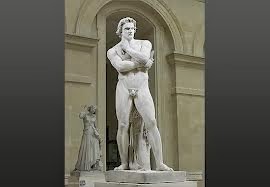
WHO was Spartacus?
WHO was Spartacus?
Spartacus was a Thracian gladiator who led a slave revolt with an army numbering in the tens of thousands.
WHAT did he do?
He defeated Roman forces over half a dozen times, marching his people up and down the Italian peninsula until he was killed in battle in April 71 B.C.
WHY did he do it?
to leave Italy-gain freedom from Romans
WHEN did it happen?
Born around 109 BC
Revolt: 73–71 BC
WHERE did it happen?
Italy mostly
HOW did it end?
HOW did it end?
Spartacus was killed in battle in 71 BC
WAS HE A HERO OR A VILLAIN?
Hero- he brought slaves to freedom
Thursday, November 7, 2013
Roman Culture
ROMAN CLOTHING
*Ancient Rome was very much a “face-to-face” society (actually more of an “in-your-face” society), and public display and recognition of status were an essential part of having status.
 *Much of Roman clothing was designed to reveal the social status of its wearer, particularly for freeborn men. In typical Roman fashion, the more distinguished the wearer, the more his dress was distinctively marked, while the dress of the lowest classes was often not marked at all.
* Typically, Roman garments were made of wool. In the early Republic, women spun the fleece and created the clothing the home, and doubtless many women of the less wealthy classes continued this practice throughout the history of Rome.
*The toga was the national garment of Rome, and the color of the toga was significant, marking differences in age and status:
*Ancient Rome was very much a “face-to-face” society (actually more of an “in-your-face” society), and public display and recognition of status were an essential part of having status.

* Typically, Roman garments were made of wool. In the early Republic, women spun the fleece and created the clothing the home, and doubtless many women of the less wealthy classes continued this practice throughout the history of Rome.
*The toga was the national garment of Rome, and the color of the toga was significant, marking differences in age and status:
- toga virilis also called toga pura: unadorned toga in the off-white color of the undyed wool that was worn by adult male citizens
- toga praetexta: off-white toga with a broad purple border shown in the right-hand drawing. The only adults allowed to wear this toga were curule magistrates (curule aedile and above).
- toga pulla: toga made of dark-colored wool worn during periods of mourning
- toga candida: artificially whitened toga worn by candidates for political office
- toga picta: purple toga embroidered with gold thread worn by a victorious general during a triumphal parade and later adopted by emperors for state occasions. A variant of this costume was the toga purpura, an all-purple toga worn by the early kings and possibly adopted by some emperors
*Propriety demanded that adult male citizens wear only one item of jewelry, a personalized signet ring that was used to make an impression in sealing wax in order to authorize documents.
ROMAN FOOD

*Rich people at beef, pork, poultry, fowl, lamb and, fish.
* Ordinary citizens grow their own fruit and vegetables.
*The poor consisted mostly of grain which was cooked into porridge or bread.
ROMAN RELIGION

ROMAN FOOD

*Rich people at beef, pork, poultry, fowl, lamb and, fish.
* Ordinary citizens grow their own fruit and vegetables.
*The poor consisted mostly of grain which was cooked into porridge or bread.
ROMAN RELIGION

*religion had played a great role in it's society and was involved in almost every aspect of the life of the Roman citizen.
*Big feasts were held in honor of certain gods and would include spectacals like chariot races and gladiatoral fights.
*Religious practices are best remembered with grand temples,great festivals and christian persecution to the final acceptance of christianity within the Roman empire over the traditional pagan religious.
*
*
The Roman religious practices can be divided into three phases which span from the founding of the city to the fall of the empire.
|
Monday, November 4, 2013
Tuesday, October 29, 2013
The History of Rome
What is a republic, and when, how, and why did Rome turn into one?
A republic is a form of government in which all affairs of are of public matter, thus nothing is hidden from the people. Public offices are appointed or elected openly, and officials do not receive titles or offices through private appointment, or anything else.Also, public code of law or constitution defines the governmental power and the rights of citizens, and posted publicly for all to see.
Rome became a republic durring 509 BC when Superbus's son, sextus, raped Lucretia, who then committed suicide because of this act. This event sparked anger in Collatinus, Brutus, and Valerius, who brought Lucretias dead body for all to see in the city and confronted Superbus and his son about what he, The son, had done. Avenging Lucretia's death, they killed Sextus and Superbus fled. then Brutus and Collatinus became the rulers, by election, and thus it became a republic, changing Rome's history forever.
Monday, October 28, 2013
In The Beginning
Rome was founded in 753 BC, and the origin of Rome begins with legend about when Romulus and Remus came to be. Rome was founded when Romulus created a city and aloud anyone to live there and all these misfit people came (all dudes) and then her was like, "yo, where my ladies at!" and he realized that his city would die without them so he had his army host a party with the Sabines, then stole the women and forced them to bare children. A few years went by and the Sabine men came back to avenge their women, but by then the women were already married and had children with these people, so they called a truce and became a united power.
Thursday, October 24, 2013
Rome PRE-TEST
Learning Targets / Rubrics
3.1 - Differentiate Roman Republic from Roman Empire
3.2 - Explain past and present impacts of Roman culture
3.3 - Analyze factors in collapse of Western Roman Empire
MY personal learning goal is to learn what kind of cultural arts they did.
- When, where and how was Rome founded? 753 BC, by people
- How was the government of the Roman Republic organized? democracy
- When and how did the Republic turn into an Empire?after Caesar was killed Augusts came in an made it an empire
- How was the government of the Empire organized?after each death a new person came to office
- When, where, why, and how did the Romans expand?
- What are Rome's greatest architectural and technological developments?
- What was important in Roman culture?
- Who were important Roman leaders?
- What caused the collapse of the Roman Empire?
- How did Rome alter history?
- How does Rome affect us today?
- What lessons can be learned from Roman history?
Tuesday, October 8, 2013
Greco-Persian wars
In 499 BC, a great war erupted between the Greek city-states and the Persian empire, ruled by Darius. Ionian greek city-states revolted against Persian rule, and Athens supported them. this caused King Darius to invade Greece in 490 BC, after putting down the earlier Ionian revolt. First, the Greeks defeated the Persians at Marathon. After that, Greek forces, led by the Spartans and King Leonidas defended the pass at Thermopylae against the onslaught brought by KIng Xerxes. They battled a much larger persian army, thus ended up being wiped out. Then, the Persian sacked and burned Athens, and went on to fight the Greeks at the strait of Salamis. the Athenian navy tricked the persians to fight in the narrow strait and ended up slaughtering them. finally they travel to Plataea where the ended the war by defeating the Persians.


Subscribe to:
Posts (Atom)